

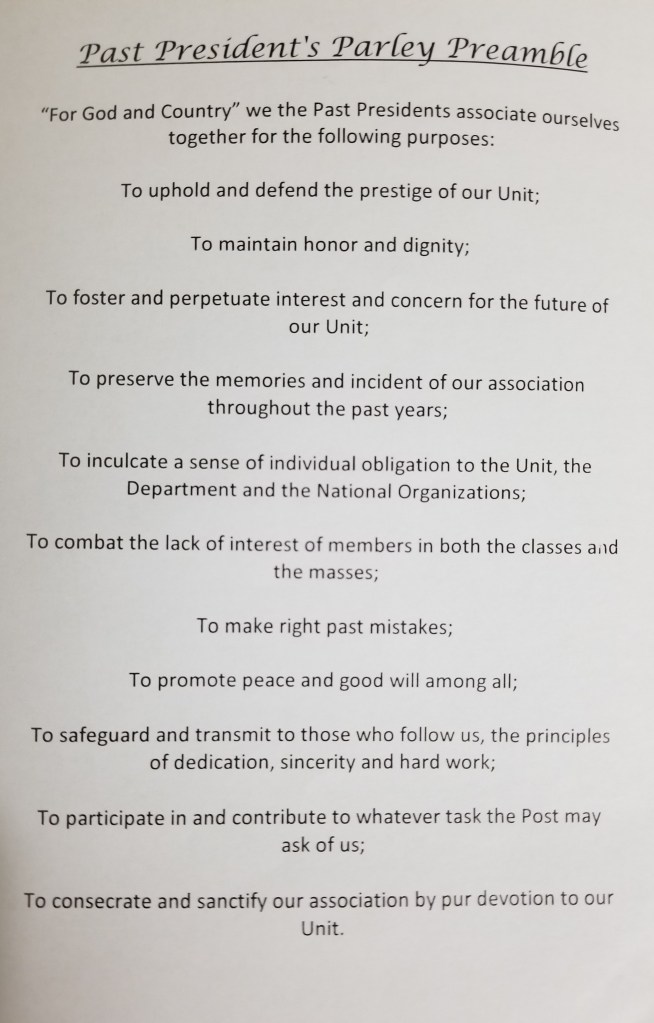
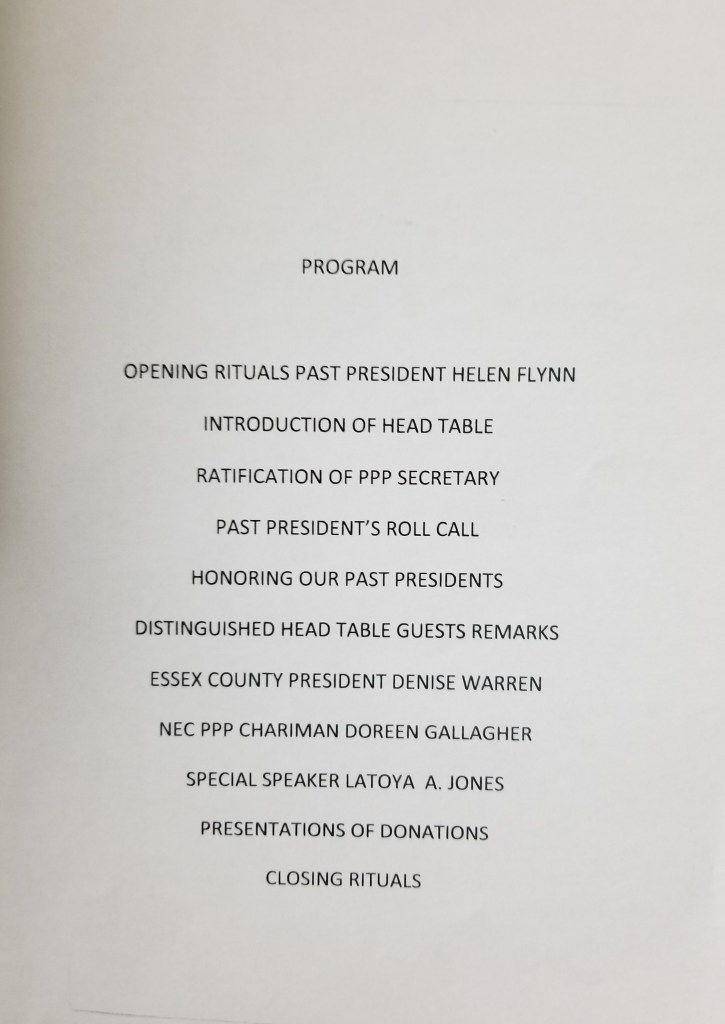
I had the pleasure of being invited to speak at the Guest Speaker at The American Legion Auxiliary Past Presidents Parley Annual Brunch. This was my first experience as a guest speaker so I was understandably terrified! I thought long about what my speech will be the topic of my speech and settled on Health. I have posted my speech below. I am sure if can be better; next time.
HEALTH: UNDERSTANDING IS HOLISTIC
Good Morning,
My name is Latoya Jones. I am a doctoral student at Rutgers University Newark studying Urban Systems.By looking at systems such as urban education, environment, housing and health and interrelationships we can learn things that would otherwise have been overlooked and these lessons learned could lead to better policies or interventions. I have taken liberties and borrowed the title of this speech Understanding is Holistic from a German-Chilean economist named Max Neef. Max Neef wrote a book called Outside Looking In: Experiences in Barefoot Economics. He tells the story of how this idea came about. While researching extreme poverty in the rural and urban areas of Latin America one day after a heavy rainfall, he found himself standing in the slum and across from him was a man standing in the mud. Not the slum, the mud. The slum was how he saw it as an economist and an Berkeley professor. The man across from him was a short thin guy, jobless, hungry, five kids, a wife and a grandmother. It was at this moment that he realized there was nothing for him to say to this man standing across from him in the mud. His educated language was useless in that moment. The absurdity of that moment led him to the metaphor of barefoot economics. He had no “small talk” for this man. “Should I tell him he should be happy the GDP has grown five percent or something? Everything was absurd”. It is in that moment that he realized, while he spoke the language of the people, and the language of an economist, he did not speak the language of the poor. And this is where his concept of barefoot economics originated. He had to invent a new language. Barefoot economics is the language for any economist who dares to step into the mud. To know is not to understand. Economist study poverty but they don’t fully understand poverty and THAT is why poverty still exists. Understanding IS holistic.
Something similar is happening in urban health and healthcare. How many of you sang the song about the skeleton dance as children? I will sing a line then ask for forgiveness (laugh laugh), it goes something like “dem bones dem bones them dancing bones, doing the skeleton dance. The foot bone is connected to the leg bone, the leg bone is connected to the knee bone…My obvious failed singing career has led me to a doctoral program.(laugh laugh) The song continues with the skeletal system…the thigh, hip, back and neck. By the way while writing this I realized I don’t know the end to this song. Raise your hands if you do. (laugh laugh). Why am I talking about a childhood song? Because it is teaching tool. I see this song as one of the earliest lessons of holistic health. The bones are connected and because of these connections we begin to understand if something goes wrong with the foot bone the leg bone doesn’t work the way it should and the knee and the hip well, there are few older people in the room I don’t need to go on. (laugh laugh).
The lesson in a way stops there. Why is it then as children, when we learn to brush our teeth, or are forced to, the lesson is about hygiene and stops there? You don’t want your breath to smell, or to get cavities and then we will have to go see the dreaded dentist. Why don’t kids learn that the gums are (singing) connected to the jaw bone, and brushing prevents gum disease,which is a bacterial infection that can enter your system through the blood attaches to fatty deposits in the heart blood vessels that can cause blood clots and may lead to a heart attack or stroke? Is it that children won’t understand? They understand plenty. For a long time we didn’t focus on holistic healthcare. Caring for the whole, not the part. We go see doctors for the parts. Eye doctor, ear, heart, head, bones and we go church and talk to the big doctor about our spirit. (laugh laugh). Mind, body, spirit. Treating mind, body and spirit that is what holistic healthcare looks like. We are complex being and should be treated as such.
Healthcare is a complicated and complex issue. There are complex interactions among the physical and social environment, genetics, education, and human capital in our communities which have determinants and consequences to our health. Macro and micro-factors both play a part in quality of life outcomes. The little things add up and become equality as important as the big things. These macro and micro factors manifest at the individual, family, neighborhood, community, state and nation level. There is strong evidence for the linkage between quality of life,development of human capital, poverty, wealth and health. Like the economist Max Neef researching poverty in the urban slums of Latin America there are researcher here in America researching the poor.Yes, it’s happening in cities across America everyday. They ask questions like oh my god why are these people poor? Why are they sick? Why don’t their kids finish high school? Why don’t their grandchildren finish high school? Why don’t they go to college and when they do, why don’t the finish? Why aren’t they homeowners? Why aren’t they business owners? Why don’t they have jobs? Well paying jobs? Why do they have two jobs,three jobs? (don’t anyone say because they are Jamaican) (laugh laugh). Why are their houses run down? Why are there so many abandoned housing? Why is there so much crime? Why are so many of them incarcerated? Why are there so many single female parent households? Why don’t they eat healthier food? Why don’t they go see the doctor or the dentist more often or when something is wrong? Why don’t they have health insurance? Suicide, mental health the list goes on.
Social scientists, economist, urban and public health researchers then come up with a hypothesis, create research design,to reject the null hypothesis. We do some sophisticated statistical analysis to generate some model for what is going to fix the problem. We then, by the grace of our benefactors, implement it and then that fails. Not all the time, but most of the time. For all the research and intervention on the poor there are still plenty of poor folks. For all the food that is being sent as aid to far away places there are still hungry people. For all the job training there are still unemployed and unskilled people. Why? Because understanding is holistic. We know, but we do not understand.
Do most of you remember the early nineties when the slogan “it’s a black thing, you wouldn’t understand”. THIS is the message it was trying to convey. That in order to understand you much live it. You must become a part of it.You must GET IN THE MUD. Yes, we need the knowledge, but equally we need the understanding. Many of you are veterans here today. Do you think anyone can truly understand what it means to be a soldier without belonging? Or for the women here will men ever understand what it means to be a woman in today’ society.
As I said before, things are changing, we are coming to this understanding of what it takes to understand. Researchers are now conducting preliminary research that is based on scientific evidence that looks at the relationship between the health of urban populations and social determinants such as environment, health care policy, educational policy, family background and history, work history,work life, educational achievement and so much more. Health is not only about the biometrical measurements. It is also not only about thing that can be measured.
As researchers we are still going to come up with models, however with a holistic approach we can have better models. Ever heard the term allostatic load as it relates to health? Allostatic load is the “wear and tear on the body” that accumulates as an individual is exposed to repeated or chronic stress. There is indeed a physiological consequence of chronic exposure to stress. We know this. Numerous studies have demonstrated greater prediction of morbidity and mortality using this model beyond traditional methods. This method incorporates measure which are not typically considered in health research and which are not easily quantified.
So today, I would like to leave you with this “Not everything that counts can be counted, and not everything that can be counted counts.” that’s Einstein, not me but you don’t have to be a genius to understand.
-Until you read again

 kingstonrepublic.com